
CONGRATULATIONS! ... YOU'VE FOUND THE MOST
FUN, EXCITING AND MOST SOUGHT AFTER HIGH SCHOOL HYPNOTIST


Imagine Your Kids... LAUGHING, CHEERING, APPLAUDING & PARTICIPATING
They only have ONE High School Graduation ... Let's do it right and make it AWESOME.
THE COOLEST, MOST FUN & EXCITING SHOW AVAILABLE FOR YOUR KIDS GRADUATION OR PROM EVENT
*JUST ASK AND I'LL SEND YOU MY PROJECT GRADUATION AND POST PROM PLANNING GUIDE PACKED WITH USEFUL INFORMATION AND TIPS ...IT'S 100% FREE ... NO OBLIGATION ... JUST ASK.

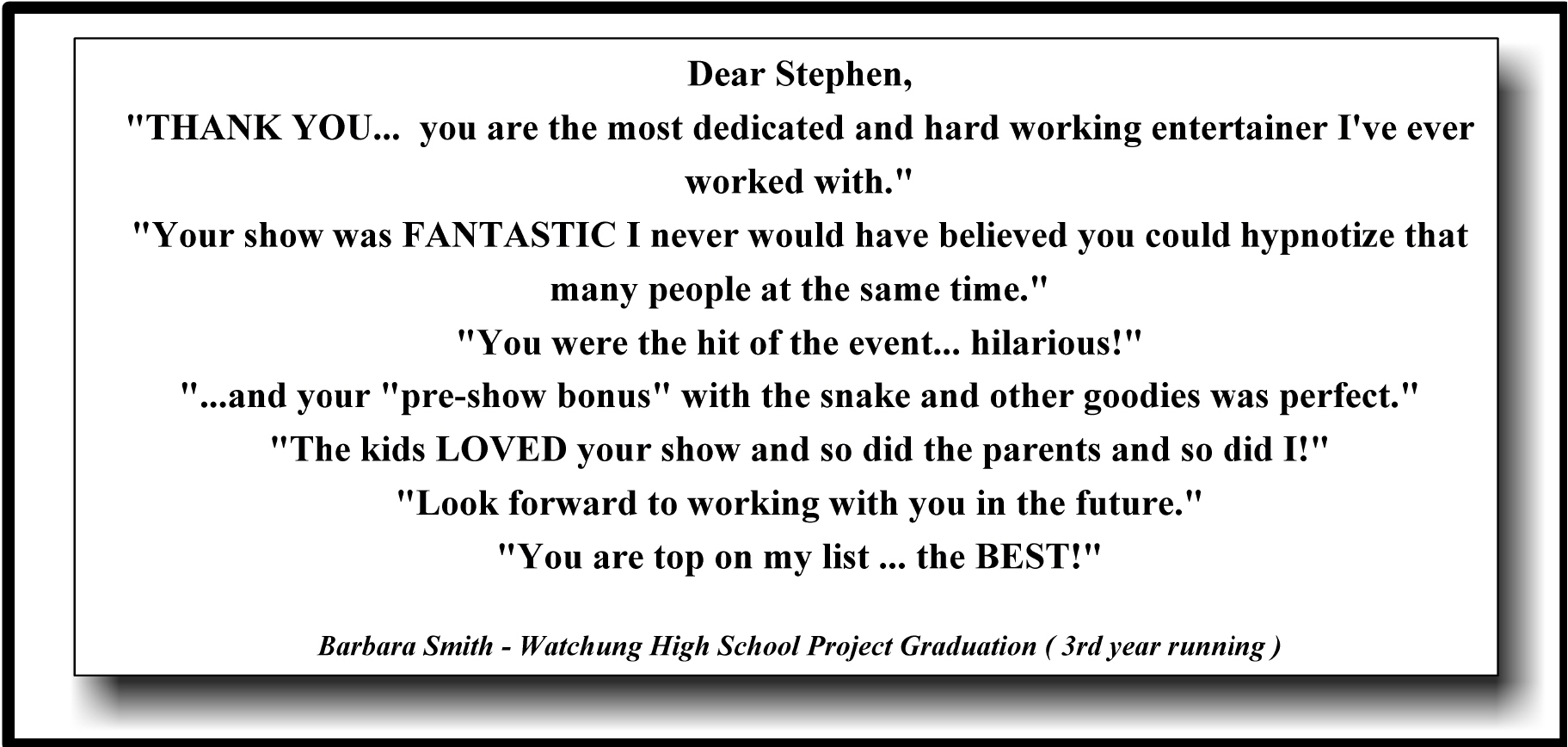
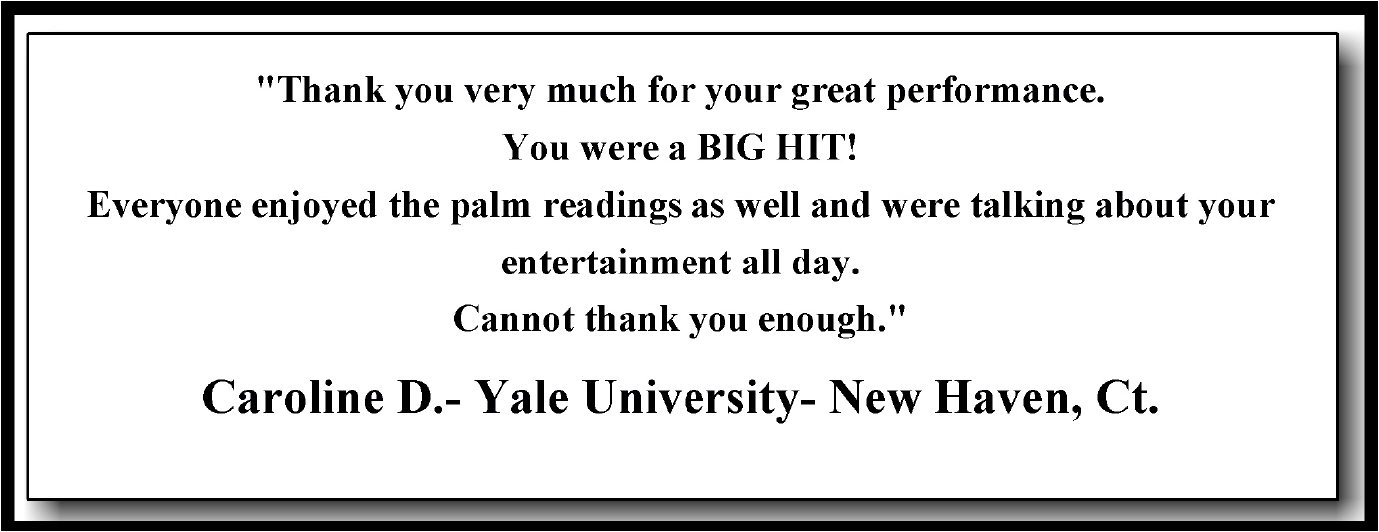
WHY DO SCHOOLS BRING STEPHEN'S SHOW BACK YEAR AFTER YEAR??

NOT JUST HIGH SCHOOLS ... STEPHENS FUN, FAMILY ENTERTAINMENT IS FEATURED REGULARLY AT THE BEST RESORTS IN THE NORTHEAST AND VOTED A FAVORITE! HIGHEST RATING ON "GIGMASTERS" NATIONWIDE ENTERTAINMENT BOOKING SITE WITH MOST FIVE STAR REVIEWS!



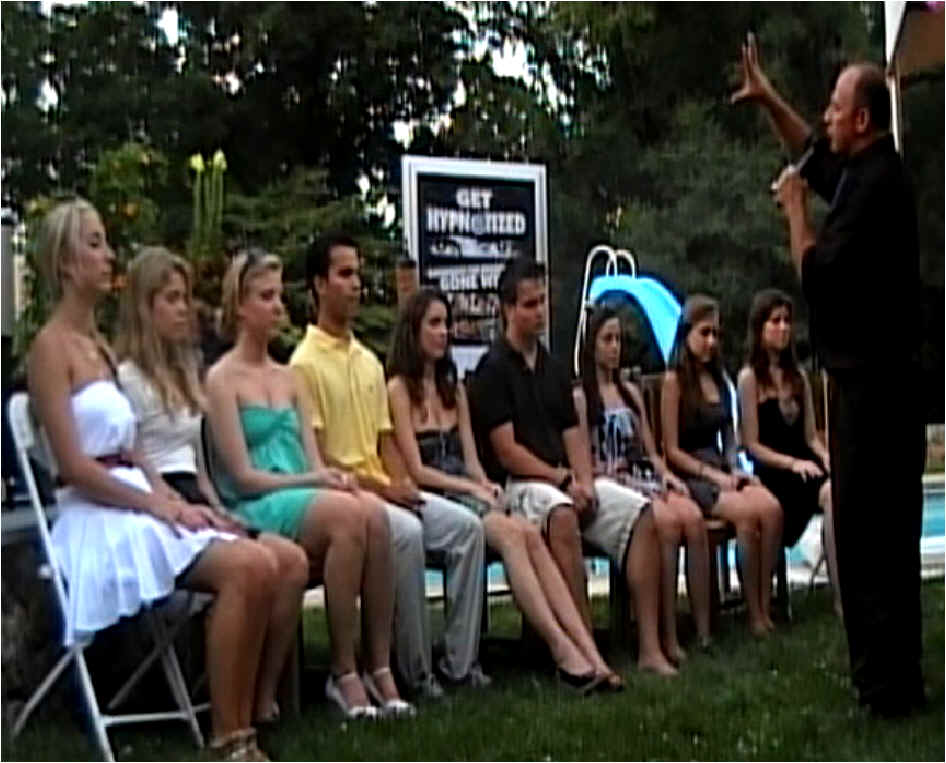
What's the BIG difference between Stephen Christopher's Comedy Hypnosis Show and others?
More than just a Certified Hypnotist... You're getting A COMPLETE STAGE SHOW!
A Full Time "Family Entertainer" with 20 years performing experience
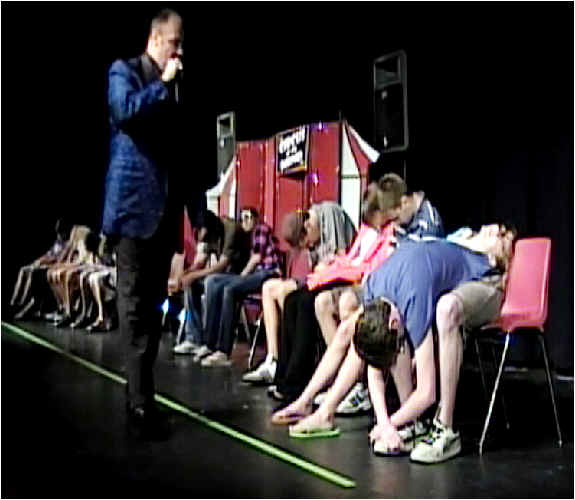
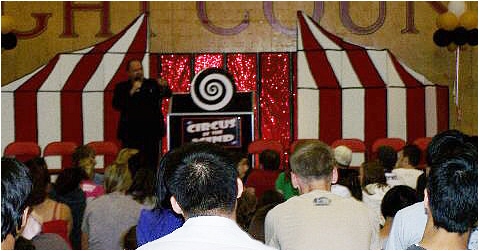
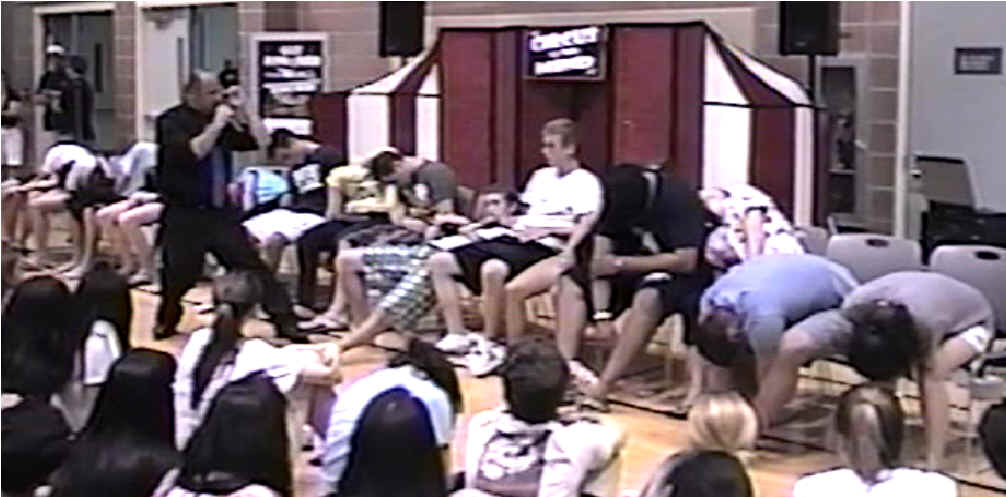
THIS SHOW ROCKS!
Fully equipped with lights, sound, props and crew
For a Guaranteed Evening of Good, Clean, Safe FUN!
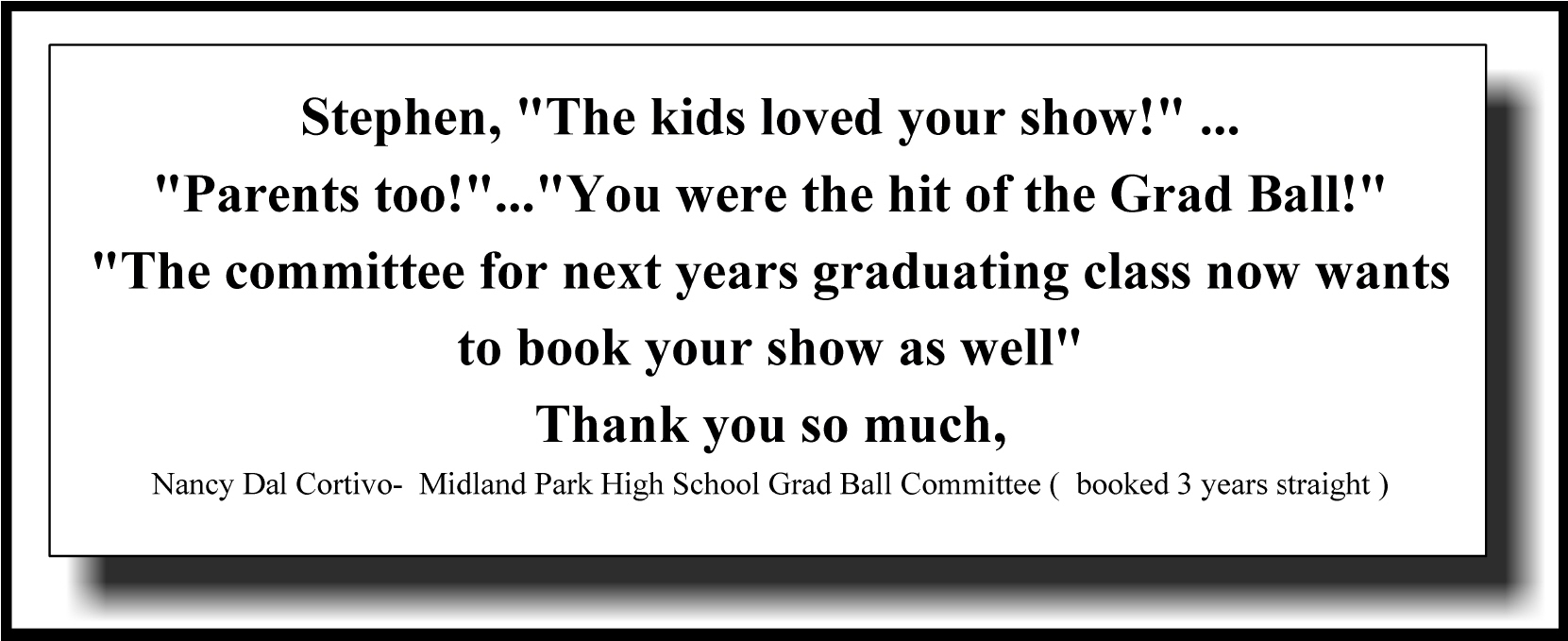
 Stephen
has been in your shoes
Stephen
has been in your shoes
Stephen has 2 sons of his own ... 1 of them just graduated High School last year so he understands exactly what High School Grads want for "cool" entertainment...
and he knows what parents expect and demand in a fun, clean, safe and memorable event for their kids.
*REQUEST YOUR FREE REPORT:
"The Ultimate Project Graduation/Grad Ball Planning Guide"
or
*Everything You've Always wanted to Know About Grad Party Planning But Didn't Know Who To Ask"
This is a 40 page printed book that you can share with your committee and it will be an extremely valuable aid in planning your event.
Just send me an email with your mailing address and I will OVERNIGHT to you my DEMO DVD and promo package including "Planning Guide"
Please include Name of School and date of your event.
email- [email protected]
NO OBLIGATION WHATSOEVER.

WHAT IS PROJECT GRADUATION?
When
Spring rolls around, only one thing is on the minds of high
school
seniors across the country: GRADUATION!
As a rite of
passage,
graduation
night is unequaled in the eyes of youth. It is a
night
to be proud, to celebrate past achievements, and to look forward to the
future.
But some teens mistakenly think that the best way to celebrate on
graduation
night is to drink alcohol. In the past, graduation
parties involving
alcohol
have left some graduating seniors with hangovers, embarrassing
memories,
and in trouble with their parents, friends, and/or the police. Some
others
were not so lucky. There were 15 teenagers killed in alcohol related
crashes
in Maine’s 1997 graduation
season.
Graduation
parties should be fun, not fatal. The idea of all night, chemical
free
graduation
parties is not new. Oregon high schools have sponsored such
parties
for graduating seniors for 50 years.
The
name “Project
Graduation”
was coined twenty years ago by planners in
Maine,
where a total of eighteen people had died during two graduation
seasons
due to alcohol-related crashes. Maine’s first Project
Graduation
was
such a success that high schools throughout the State adopted similar
programs,
and “Project
Graduation”
became a generic name for the
chemical-free
graduation
parties that have started a new tradition -
celebrating
safely.
All
school-related functions are supposed to be chemical-free, but what
makes
Project
Graduation
different is the attitude of the students. They
have
made a conscious decision to enjoy their graduation
night without
alcohol
or drugs. And no other group, including parents and school
personnel,
can make that decision for students.
It
should be noted that the graduation
party suggestions in the Planning Guide can be used to plan chemical-free
activities throughout the year.
While
celebrating safely has been referred to as “Project
Graduation,”
you’ll
find that this approach is equally effective for planning homecomings, proms,
Halloween carnivals, victory dances, and other celebrations.
CALL (800) 644-7497
OR
EMAIL- [email protected]
CLICK HERE for
"Four
Simple
Questions To Ask Before Hiring Any Stage Hypnotist
For Your Event"
A Bit of the History of Stage Hypnosis
by Stephen Christopher
Stage hypnosis of some sort has been going
on since the 18th century, and techniques that resemble what we think of as
hypnosis have been going on throughout recorded history. In the stage shows of
the 18th and 19th centuries, the "subject" was "mesmerized" while in a waking
state and was said to be completely at the will of the operator, or hypnotist.
Brochures for such shows assured audiences that the process would take place
"without the aid of trick, collusion, or deception, in the slightest possible
degree." While the name may have changed over the years to reflect the popular
culture, the practice remained largely the same. The term "hypnotism" was not
coined until 1841, and indeed these early displays of "mesmerism" were viewed to
be the work of ordinary suggestion rather than succumbing to a trance. That
didn't stop some early stage hypnotists to claim they were using supernatural
powers to influence their subjects. In the 20th century, even though the term
"hypnotism" was used widely, those performing stage hypnotism explained their
performances as the works of supernatural powers. As late as 1996, Ormond
McGill, the preeminent American hypnotist wrote, "Some have called this powerful
transmission of thought from one person to another 'thought projection.' The
mental energy used appears to be of two types: magnetic energy [...] generated
within the body and telepathic energy generated within the mind." Right or
wrong, however, the terms hypnosis and mesmerism are used pretty much
interchangeably to describe what we think of as stage hypnotism. Most people
have moved beyond the concept of a man with intense eyes swinging a pocket watch
on a chain to put someone into a zombie-like trance, but there's still some
misconception surrounding hypnotism. People who have been asked after a session
of stage hypnosis if they recall the experience have sometimes emphatically
claimed that they do not recall it at all. Others, like the great 20th century
physicist Richard Feynman describes the situation as knowing that the hypnotist
is wrong, but finding it easier to go along with the instructions. Indeed,
hypnotized volunteers are completely free to refuse any suggestions. In fact,
they are not in a semi-conscious state at all, but in a state of hyper
awareness. There is fairly widespread unfounded belief that hypnosis can cause harm by
affecting the hypnotism subject's judgment, but there is no evidence to suggest
that it's true. There are some psychologists and mental health professionals who
are afraid that hypnosis could bring out emotions in the subject that they don't
know how to handle. Again, there isn't evidence to back up this theory. The
effects of stage hypnosis are chalked up to a combination of peer pressure, a
desire to comply, suggestibility, and plain old trickery and stagecraft. Some
theorize that having the excuse to step firmly outside their comfort zone are
enough to convince subjects to go along with the suggestions. And, while it may
be unseemly to mention it, there are a certain number of charlatans in the
history of stage hypnosis who have used paid subjects "planted" in the audience.
Ormond McGill's own New Encyclopedia of Stage Hypnosis discusses a fake hypnosis
act where the hypnotist prompts the subject with off-mic whispers. Successful
stage hypnosis employs the strategies of participant compliance, participant
selection, and audience deception for a successful stage hypnosis session.
Participants feel social pressure to comply from internalizing the feelings of
the expectant audience. The participants selected are quite often those who
appear to be the most extroverted audience members. And the stage hypnotist
uses a certain degree of "sleight of hand" to lead the audience where he wants
them. Perhaps the most successful stage hypnotist ever was Peter Casson of the
UK. Nobody had seen anything like his shows, which played to sold out audiences
in the mid-twentieth century. During his shows he would lead a group of
hypnotized spectators through a number of activities like crying at imaginary
films. Skeptics were invited onstage where they, too would become willing
participants in the act. However, Casson grew alarmed by what he thought of as
rogue hypnotists who would induce people to commit degrading or dangerous acts,
and formed the Federation of Ethical Stage Hypnotists. He devoted himself to
debunking what he believed to be fake hypnotic practices like past life
regression. In fact, in the UK, the 1952 Hypnotism Act was implemented to
protect the public against unscrupulous hypnotists. The act was reviewed in
1994, and a conclusion of a study at that time was presented to parliament. It
said, "there was no evidence of serious risk to participants in stage hypnosis,
and that any risk which does exist is much less significant than that involved
in many other activities."
Stephen Christopher the CLEAN Comedy Hypnotist for Graduation Party in New Jersey

Project Graduation Ideas and Planning Guide
A How-To Manual
INTRODUCTION
hen Spring rolls around, only one thing is on the minds of high
wschool seniors across the country: GRADUATION! As a rite of
passage, graduation night is unequaled in the eyes of youth. It is a
night to be proud, to celebrate past achievements, and to look forward to the
future. But some teens mistakenly think that the best way to celebrate on
graduation night is to drink alcohol. In the past, graduation parties involving
alcohol have left some graduating seniors with hangovers, embarrassing
memories, and in trouble with their parents, friends, and/or the police. Some
others were not so lucky. There were 15 teenagers killed in alcohol related
crashes in Maine’s 1997 graduation season.
Graduation parties should be fun, not fatal. The idea of all night, chemical
free graduation partes is not new. Oregon high schools have sponsored such
parties for graduating seniors for 50 years.
The name “Project Graduation” was coined twenty years ago by planners in
Maine, where a total of eighteen people had died during two graduation
seasons due to alcohol-related crashes. Maine’s first Project Graduation
was such a success that high schools throughout the State adopted similar
programs, and “Project Graduation” became a generic name for the
chemical-free graduation parties that have started a new tradition -
celebrating safely.
All school-related functions are supposed to be chemical-free, but what
makes Project Graduation different is the attitude of the students. They
have made a conscious decision to enjoy their graduation night without
alcohol or drugs. And no other group, including parents and school
personnel, can make that decision for students.
It should be noted that the graduation party suggestions in the pages that
follow can be used to plan chemical-free activities throughout the year.
While celebrating safely has been referred to as “Project Graduation,” you’ll
find that this approach is equally effective for planning homecomings, proms,
Halloween carnivals, victory dances, and other celebrations.
2
GETTING STARTED
When should the first planning meeting be, and who should be invited?
Many communities begin planning and fundraising for their seniors’ Project
Graduation when those students are freshmen. If you must wait until they
are seniors, try to hold the first planning meeting as early in the school year
as possible. November or December is not too soon, although senior classes
with smaller enrollments may start planning a little later.
The small group of student planners who originate the idea for Project
Graduation should decide among themselves who should be invited to the
first planning meeting. Some veteran planners have said that it is best to
include at least one or two members from key groups - students, parents,
teachers, and even business persons.
What decisions need to be made at the first informal planning meeting?
A list of discussion items should be made before the meeting so that time
may be spent constructively. Some of the areas you may choose to address
could be the types of committees that will be needed; whether the
committees will be made up of students only, or of a combination of
students, parents, and teachers; approximately how much money will need
to be raised through donations, fundraisers, and ticket sales; and how
enthusiasm may be spread to other students, parents, school employees,
and to the community-at-large.
Which group will take the lead in planning the party?
Is Project Graduation for seniors by seniors? For seniors by parents, with
help from school personnel? For seniors by school personnel, with help from
parents and the business community?
For the purposes of this booklet, it will be assumed that your Project
3
Graduation is being organized by seniors, with assistance from parents,
school personnel, local business persons, and members of the media. But it
should be noted that there have also been some very successful Project
Graduations where parents or school administrators took the lead.
Who is the chairperson (or chairpersons) whose job will be to oversee the
planning process?
It is very important to have one, or even two, students who will take
responsibility for coordinating the work of the various committees and
overseeing the entire project. It is a big job, and it’s not for a shy or overly-
sensitive student. Past Project Graduation chairpersons have reported that
the job is as rewarding as it is big, and knowing that they may have played a
role in saving the lives of their friends is more than enough payment for the
headaches that come with being “the boss.”
WHAT WILL WE DO?
efore considering possible settings, themes, and activities for Project
Graduation, it’s a good idea to know when Project Graduation will
Bofficially begin and end so you will know how many hours you will
need to fill. Past planners have suggested that it is best to schedule as few
hours as possible between the end of graduation ceremonies and the party’s
beginning. And they have also emphasized the importance of the event
lasting all night.
Upon first learning about Project Graduation many people have asked “Why
should it last all night?” Graduation night is a time of high energy and
buoyant spirits. If Project Graduation parties end while the seniors are still
“ready to party,” a few might be tempted to continue the celebration in ways
that are not safe, in spite of their pledges to remain chemical-free.
In addition to being chemical-free and lasting all night, the most successful
Project Graduation celebrations provide intense natural stimulation on a
variety of levels that makes the artificial stimulation of alcohol and drugs
pale by comparison. The fun associated with this “natural high” is a strong
selling point when promoting Project Graduation. For instance, Project
Graduation might start out with physical activities (a dance or athletic
contest), then move to sensory activities (a special dinner or a walk on the
beach), or emotional activities (class will, or seniors taking turns telling what
they will miss most about high school). The possible activities for Project
Graduation are endless, and it won’t be hard to develop a winning
combination for your high school. Just remember when planning the night’s
schedule that the name of the game is “sensory variety.”
Each community has its own assets when it comes to choosing activities,
and preferences seem to have some regional differences. So look at the
special benefits that your area has to offer, and get lots of input from senior
class members. Some settings, themes, and activities that have been
successful at other Project Graduations across the country are listed here to
help you get started with your o
wn plans.
POSSIBLE SETTINGS
School Facilities
City Parks
Recreation Centers
YMCA/YWCA
Elk/Moose/Masonic Lodges
Country Clubs
Racquet Clubs
Campgrounds
College Campuses
Sports Arenas
Airport Hangars
Natural Areas (e.g., river, lake, spring, park, mountain)
Facilities to Rent (e.g., amusement park, train, bowling alley, movie theater)
Local Attractions (e.g., river boat, “haunted house,” convention center,
ranch)
THEMES
Not all Project Graduations have themes. It is strictly a matter of
preference. Some schools hold theme contests. Students are encouraged to
submit theme suggestions, and a group of student judges select the best
5
entries. Next, a ballot listing the top five choices is distributed for seniors to
vote for their favorite.
6
Some of the more popular themes from Project Graduations around the
country include:
Hawaiian Luau Toga Party
The Class Slogan Olympics
Casino Night Movies
Rodeo Titanic
Theme music Men in Black
nights, 50's, 60's Mardi Gras
Disco Medieval
Masquerade Ball
Activities
Many planners for Project Graduation have found it helpful to distribute a
“Senior Survey,” a selection list of possible activities to get input from the
entire class. Seniors vote for the activities that appeal to them most. Senior
Surveys are explored more fully in the Entertainment Committee section, and
a sample Senior Survey appears at the end of this booklet. Popular activities
have included these:
Music: Live bands, DJ’s, music videos
Dances: Dances and dance contests
Entertainers: Comedians, magicians, hypnotists, caricaturists, etc.
Class Histories: Slide shows, skits, and class wills
Food: Progressive dinners, cookouts, buffets, snacks, breakfasts
(perhaps pool-side at sunrise)
Games: Arcades, casinos, video games, pool, miniature golf, school
trivia, scavenger hunts, team relays, bingo, eating
contests, Jell-O wrestling, mashed potato fights, paint-ball,
watching videos.
Athletics: Tennis, racquetball, volleyball, bowling, roller skating, ping
pong, swimming, weight lifting, aerobic dancing, donkey
basketball
The Unusual: Tethered hot air balloon rides; creating a giant sundae or
submarine sandwich; graffiti wall of butcher paper on
which to record feelings; boat rides; talent shows; camp-
outs.
Students’ Selling Points. One big party will be much more fun and will offer a
wider variety of activities than smaller private parties.
This will probably be the last time that the entire class will be together. It
will be a night to remember . . . and chemical-free seniors will be able to
remember it.
Seniors will select the activities, food, and entertainment to assure that the
party will be great fun for their class. Seniors will be leaving a legacy of safe
celebrations for undergraduates - a legacy that will probably save the lives of
future graduates.
Teachers’ Selling Points. All seniors will have a party to attend on
graduation night. Some students will discover or rediscover what a great
time they can have without alcohol or drugs. A tradition of substance-free
parties will be established or reaffirmed in the school district.
An activity like Project Graduation can enhance the school’s community
relations.
Parents’ Selling Points. No one will have to risk injury or death due to drug-
related crashes. None of the seniors will have to deal with peer pressure to
drink or ride with a drinking driver on their special night.
Cost will be minimal to students and parents. Parents can relax on
graduation night knowing seniors are safe and having fun.
ENERATING INTEREST
G
No doubt about it - putting together a big, well-organized party requires a
great deal of time and effort from many people. Past planners have reported
that it’s essential to gain the support of the other students, parents, school
personnel, police, and the community to make Project Graduation the best
party possible. Regardless of who has taken the lead in organizing Project
Graduation - students, parents, teachers, or other school personnel - many
people are going to have to be “sold” on the idea.
Generating Interest From Other Students
A good place to introduce the concept of Project Graduation to the rest of
the seniors is at a class-wide meeting during school hours. And, while it is
important that the students understand the rules prohibiting alcohol or other
drug consumption before and during the party, the main emphasis should be
on how spectacular the graduation celebration will be. Project Graduation
may sound even more attractive to your classmates if it is described by the
senior class officers, who, hopefully, will have been active in the planning
process from the very beginning.
It’s important to let the other seniors know that letters will be sent to all
parents explaining the party’s rules and asking for their help so that students
will feel that the organizers are being “up front” in all aspects of the planning
process. The students need to understand that, while Project Graduation is
a party for and by seniors, it can be bigger and better with help from parents
and other adults. Also, adult volunteers will be crucial on the night of the
party to act as food servers, chaperones, etc., so that student planners may
be free to enjoy the festivities with the rest of the class.
As plans for Project Graduation progress and specific details become known,
keep the other seniors informed - either with written notices or public
address announcements at school. It is crucial that all the students feel like
Project Graduation is their party.
Generating Interest from School Personnel
Involvement of school personnel is critical to the success of your Project
Graduation. It is wise to involve the principal early in the planning process
and ask him/her about best ways to obtain school faculty and staff support.
Ask for time on the faculty meeting agenda to present information on the
reasons for, the benefits of, and the current status of Project Graduation.
Ask for their help. Perhaps some would be willing to be advisors or members
of the committees needed, or serve as chaperones at the event. They may
also help by promoting the party through articles in the school newspaper,
announcements over the school’s public address system, posters, ticket
sales, and letter-writing.
Generating Interest from Parents
Parent support is also necessary for the success of Project Graduation.
Since some parents may plan family parties on graduation day or night, the
more notice they have of the need to schedule carefully, the better.
Experience has shown that the easiest way to contact parents is by direct
mail. The initial letter to parents should be co-signed by the Project
Graduation Chair(s) and the school Principal. It should outline some of the
reasons and rules for Project Graduation, and should stress the positive
aspects of the party. It might include three forms for parents to return to the
school - (a) a consent form that will allow the student to participate, (b) a
volunteer form which identifies the general area in which the parent would
like to help, and (c) a donation form indicating what the contribution will be
for those who wish to donate. Samples are found at the back of this booklet.
Generating Interest from the Community
In addition to the other students, school personnel, and parents, you will
need the support and cooperation of many subgroups in the community,
including local merchants, civic groups, law enforcement officials, and the
media. If possible, give each subgroup a poster to display that will identify
the organization as “A Supporter of Project Graduation.”
Local Merchants-for Donations of Money, Services, and Prizes
The fundraising/finance committee, prize committee, and food committee
should work together through the Project Graduation chairperson to make
sure they don’t contact the same merchants for donations. In the initial
approach to merchants, give them a brief sketch of the party reasons, rules,
and benefits. Put emphasis on the community service they would provide by
contributing to the success of the event. Some Project Graduation
organizers have sent letters to merchants prior to contacting them in person
or over the telephone. The advantage of sending advance letters is that
10
fundraisers will not have to repeat the information or take as much time at
each place. The drawbacks, of course, are that processing letters takes
time and involves the cost of paper, envelopes, and postage.
Civic Groups - for Donations of Food, Prizes, Money, or Labor
The leaders of these groups may be approached in a similar manner to the
merchants. It is possible that an organization like the Masons, Elks, or
Women’s League, might choose Project Graduation as their club’s special
charity project, and give both financial and volunteer support. Local
churches and synagogues might also be willing to help with financial
assistance, volunteers, or by loaning equipment or special facilities.
Law Enforcement Officials - for endorsement and any help that might be
needed in policing the area surrounding the site(s) of the party
Also, the public support of the police and other officials could go a long way
in selling the idea to parents, school administrators, and other members of
the community.
Media - for generating positive print and broadcast stories on Project
Graduation
The publicity will help convince the public that the party will be fun, safe,
and a worthwhile community project. More information on contacting the
media may be found in the Publicity Committee section.
RGANIZING THE COMMITTEES
O
Committee volunteers are like a team that must play harmoniously to make
Project Graduation a success. In addition to students, committees may
include parents, school personnel, merchants, media representatives and
any others who are interested in assuring that graduation night is both
exciting and safe.
Organizing the committees is a big job. Each committee member must see
himself as a member of a team, and not in competition with members of
11
other committees. This is especially important when committees are
contacting local businesses for donations of goods, services, or money in
order that each be contacted by the best person for the job, once, in the
most effective way.
The Project Graduation Chairperson must stay in regular contact with the
committee leaders, and should attend the more important meetings of the
committees. He or she should hold occasional meetings of the committee
leaders to enhance communication and allow committee leaders to take an
overview of the entire effort back to their committees.
Another important function of the Chairperson is to arrange for insurance
coverage. It may be possible for Project Graduation to be covered under the
policies of the Booster Club, PTA, or school. If coverage is to be arranged
through a club, it may be necessary for all committee members to join the
club to be eligible.
It is helpful for the Project Graduation Chairperson to keep a journal or other
records of activities during the planning of the event to pass on to the
chairperson for the upcoming year. A calendar noting the dates of major
activities and meetings proves helpful. The chairperson should ask the
leaders of the committees to keep similar journals to pass on.
Finance/Fundraising Committee
The duties of the finance/fundraising committee are to solicit funds and
services for Project Graduation, keep exact records of donations and
expenses, and organize any fundraising projects.
When soliciting funds, you might find it helpful to send letters to larger local
businesses and civic groups and follow-up with personal visits or phone
calls. For smaller businesses and private homes, teams of two committee
members could solicit door-to-door. Volunteers who have done this in the
past recommend taking copies of a flyer that describe Project Graduation,
and including a phone number and address, to leave with those who want
time to consider their contribution.
Regardless of how the fundraising/ finance committee chooses to contact
contributors, it is crucial that the Project Graduation chairperson know
which groups have been contacted so that the same people are not
approached by other committees.
One person needs to be in charge of keeping exact records of donations and
expenses. The committee leader of the finance/fundraising committee may
serve in this capacity or appoint another member to be treasurer. The
Project Graduation treasurer will be responsible for opening a bank account
for the party, writing checks, and keeping a detailed record of available
funds and expenditures.
There is an endless number of fundraising activities that may be organized
by the finance/fundraising committee. A list of fundraising activities may be
found starting on page 31.
Tips for Finance/Fundraising Committees
Consider incorporating your Project Graduation as a nonprofit organization
so that donations from local businesses will be tax deductible.
Visit your local Chamber of Commerce and ask them to contact their
membership for donations.
Contact local fast food chains for donations of money and/or food and drinks.
Decorate coffee cans or shoe boxes with the high school’s colors and
emblems and place them in nearby stores and restaurants for collections.
Ask parents to solicit donations from civic organizations to which they
belong.
Have seniors and their parents collect newspapers, bottles, and aluminum
cans to raise money.
Donate leftover funds as “seed” money for next year’s Project Graduation, for
a scholarship, or to purchase a gift for the school from the senior class.
Entertainment Committee
The entertainment committee is responsible for gathering senior input on
themes and activities, selecting and securing facilities, making
arrangements for entertainers and events, and working with the other
committees.
Gathering Senior Input
After a decision has been made about the desirability of a theme, the
entertainment committee should conduct a Senior Survey, if possible, to
assure that the night’s activities are attractive to the senior class (review
the sections on Themes and Activities and see the “Sample Senior Survey” in
the back section). If you opt to have a theme, design the Senior Survey so
that the activity choices reflect the mood of the theme.
Selecting and Securing Facilities
There are many factors to consider when selecting and securing facilities.
First, if activities throughout the night are to take place at various locations,
you will not want members of the senior class to provide their own
transportation. Ask your community to donate free use of buses for the
evening, or ask the school to donate the use of school buses. Remember
that the drivers will need to be paid, unless they are willing to donate their
services to Project Graduation.
Other considerations, when selecting facilities are safety, convenience, and
price. The members of the entertainment committee should ask themselves
these questions:
What are the fire regulations concerning the selected locations?
Are there possible hazards that should be addressed?
Do the facilities have the storage refrigeration, or cooking units that
will be needed by the food committee?
Do the facilities have public address systems, or at least the proper
electrical outlets for microphones and speaker?
Could the use of the facilities be donated by the owners, or paid for by
a civic group or business?
14
Making Arrangements for Entertainers and Events
If a live band is hired for Project Graduation, the entertainment committee
should make sure that there is a written contract specifying that drugs and
alcohol will not be used by members of the band. Also, it should be made
clear to the band, or to the disc jockey if one is hired, that songs
emphasizing drugs and alcohol may not be played. The contract should
state that rules are to be followed or payment will not be made.
The entertainment committee is responsible for securing any items
necessary for events during the night. They are also in charge of hiring any
special assistants, such as lifeguards, or security guards. After all the plans
and assignments have been made, the committee should have a
brainstorming session regarding any extra items that might be needed. Such
extras might include small tables, chairs, trash cans, bug spray, a first aid
kit, masking tape, scissors, felt-tip markers, and extension cords.
Working with the Other Committees
It is especially important for the entertainment committee to work with the
other committees. Some of the questions that will need answers are these:
Can the menu selected by the food committee be prepared and served
at the facilities?
Do the owners of the facilities have rules (no nail holes in the walls or
no tape on the ceiling) that should be made known to the decorating
committee?
Tips for the Entertainment Committee
Listed here are some suggestions from other entertainment committees
around the county:
Plan a schedule of activities that will last the whole night. When the
initial excitement of one activity begins to wane, have another upbeat
idea ready. Don’t allow long pauses between activities.
While exciting activities will enhance Project Graduation, be sure to
plan some more relaxing activities, too. The senior class won’t be able
to go full-steam all night unless there is a balance.
Build a time capsule. Tell all the seniors to bring an item to place in
the time capsule that will be opened at their 10th, 20th, or 25th
reunion.
Place an ad on the bulletin board at the nearest college asking for
artists who can serve as caricaturists. Be sure to interview applicants
before hiring.
Have a group of seniors prepare a class history slide show for the
party.
Provide a paper-covered wall for graffiti that will be displayed at class
reunions.
Make a videotape of the party. This can be played back at the party’s
breakfast.
Food Committee
The food committee is responsible for planning the menu, as well as
preparing and serving all meals and snacks. The committee leader should
check with the town, county, or State Health Department regarding special
provisions for food handling.
Some food committees include food choices on the Senior Survey distributed
by the entertainment committee. Leaders of the entertainment and food
committees should work together to coordinate this, if these questions will
be asked on the entertainment survey.
If there is a theme, the food committee should make sure that the meals and
snacks are somehow related to it. The decorations committee should be
involved, as well, to coordinate table decorations with food.
16
After the menu has been selected and the other committees notified, the
food committee must secure adult volunteers to prepare the food and keep
tables replenished. This should be done in shifts, and a schedule determined
to make sure there are adequate volunteers to cover all time slots. Prepare
for the contingency of volunteers calling in sick.
Tips for the Food Committee
Serve food all night rather than scheduling specific serving times that
could interrupt dancing, games, and party continuity.
Provide plenty of soft drinks. Students will drink more than you
imagine. You will probably be able to return any that are unopened.
Consider serving finger foods to avoid using (washing) cutlery.
Make sure you have ample food for volunteers.
Use multiple food stations. Some possibilities include tacos, deli
sandwiches, salad bars, ice cream carts, popcorn machines, and soft
drink stands.
Make arrangement with a local homeless shelter or similar
organization to pick up left over food.
Decorating Committee
The decorating committee is responsible for decorating the facilities and
food tables. It is crucial that they work with the other committees, the
Project Graduation chairperson, and the local fire department.
Tips for the Decorating Committee
Balloons, balloons, balloons! Some could even be hung in a big net
above the dance area to be released all at once.
Crepe paper and streamers
Posters
17
Plastic wall coverings - long, wide rolls of plastic are available in many
stores where landscaping and construction supplies are sold.
A sign post in a central location, giving directions to various activities.
A huge parachute hung over the entire area to provide a canopy
atmosphere.
Costumes - garters on men’s sleeves, visors, black vests for a casino
theme - and women in the costumes of the appropriate era.
Dimmed lights . . . colored lights . . . rotating mirrored ball on the
ceiling.
Public Relations Committee
The public relations (PR) committee is in charge of generating awareness
and enthusiasm for Project Graduation among students and in the
community. It is also the responsibility of the PR committee to thank the
organizations who have donated money, merchandise, and services by listing
them in a news release and by sending them notes of appreciation after
Project Graduation is over. The two major target audiences that the PR
committee must work with are the student body and the members of the
community.
Target Audience: Student Body
Here are some of the ways the PR committee might publicize Project
Graduation to students. The committee might decide to use some or all of
these suggestions - or create their own!
Ask the principal if various popular seniors can make announcements
about the party on the public address system.
Make Project Graduation flyers available at the school’s sporting and
social events.
18
Ask the principal if the student body president can make an
announcement at the Junior/Senior Prom, at graduation rehearsal, and
at the graduation ceremony.
Check with the principal about displaying Project Graduation prizes in
a showcase at the high school.
Have a senior on the paper staff write a monthly column in the school
newspaper that describes the party plans as they develop.
Print buttons to hand out to seniors when they buy tickets - “Project
Graduation - The Greatest Party for the Great Class of 19_.”
Release helium balloons at school as part of your publicity campaign
during lunch.
Ask establishments popular with seniors if they will display Project
Graduation promotional posters.
Have the celebration date publicized on the school’s athletic calendar.
Target Audience: The Community
Good relations within the community will enhance the success of Project
Graduation. Here is some information on how to build good relations in the
community through the media, civic groups, and businesses.
Make sure your news releases and public service announcements are
typed and double-spaced on one side of 8 ½ by 11 paper. Include the
name, address, and phone number of a person to contact for more
information. To let the editor know when your copy ends use this mark
- ###. For an example of a news release, refer to the back of this
information.
When promoting your Project Graduation to the media, try to make
appointments with local newspaper editors, TV news directors, and
radio station managers. Give them a news release, a list of statistics
about teenage drinking, drugging, and driving, and any other
information they might be able to use. You might also ask them to
write or broadcast an editorial in favor of Project Graduation.
Public service announcements (PSAs) for community nonprofit groups
are often aired on radio and TV at no charge. In addition to a news
release describing Project Graduation and a fact sheet, give TV and
radio stations a very short PSA announcement that they can read over
the air. “Sample PSA” may be found with this information.
Encourage TV and radio stations to provide live coverage of Project
Graduation. Coverage of the event will let the entire community share
the fun, and it will encourage undergraduate students to organize a
Project Graduation when they become seniors.
Offer the chairperson, principal, or student body president to local
radio and TV talk shows for interviews on Project Graduation.
Contact civic groups and offer the Project Graduation chairperson,
principal, or student body president as a speaker at any upcoming
meetings.
Consider using billboard space to promote Project Graduation. Local
businesses might help the publicity committee rent the space if the
owners won’t donate it.
Ask local businesses with “reader boards” to put up signs a week
before graduation promoting the party.
Contact the leaders of the other committees or the Project Graduation
chairperson to obtain a complete list of all businesses and civic
organizations who have donated merchandise, services, equipment, or
facilities. Send them notes of appreciation immediately after Project
Graduation to ensure good community relations for next year’s Project
Graduation.
Prizes Committee
20
Most Project Graduation parties include prizes that add to the suspense and
excitement of the evening. A list of prizes that have been offered at other
Project Graduations is included with this packet.
The members of the prize committee for your Project Graduation may find
“Tips for Prize Committees” helpful.
Ticket Committee
The ticket committee’s responsibilities include designing, printing, and
selling the tickets; supplying ticket sellers with copies of a fact sheet for
students who have questions about Project Graduation; working with the
counselor’s office to discreetly furnish free tickets to students unable to
afford them; and providing lists containing students’ names with
corresponding ticket numbers for chaperones in case any tickets are lost on
the night of the event.
When designing the Project Graduation tickets, the ticket committee should
work closely with the leader of the prize committee. It may be desirable to
include several “tear off” sections for special drawings, with spaces for the
students to sign their names.
It’s a good idea to keep the cost of the tickets as low as possible. One
school that hosts a Project Graduation reports that five dollars is a good
price. Hopefully, the rest of the money you’ll need for the event will be
donated or earned through fundraisers organized by the finance/fundraising
committee. Many Project Graduation parties are free to seniors.
Coatroom Committee
The job of the coatroom committee is to provide a secure place for students
to store purses, coats, prized party favors, and other possessions. One of
the easiest ways to do this is to number large grocery bags and have
correspondingly numbered claim checks. The adult volunteers who agree to
work on each shift should be given the bag numbers and students’ names on
a clip board in case someone loses his or her claim check.
21
If water activities are in the schedule for your Project Graduation, the
coatroom committee should consider furnishing plastic bags to hold wet
swim suits.
Tips for Prize Committees
The committee leader should make up a list of business establishments for
all members of the committee who are going to be soliciting merchandise.
The list should include the merchants’ addresses and should allow space for
any pertinent information. Each committee member’s list should be no
longer than 15 to 20 merchants. Set a deadline for making contacts. Have
weekly meetings to obtain progress reports.
Work closely with the finance/fundraising, food, and decorating committees
so that you won’t approach the same businesses for contributions.
Make sure that parents who are owners of local businesses are contacted in
case they would like to donate prize items to Project Graduation. A form for
such donations should be included in the initial letter to parents (see the
“Sample Letter to Parents” with this information).
Display a poster that lists the prizes near the ticket sales table to generate
student interest.
Make arrangements for storing the prizes before and at the party. Work with
the coatroom committee members who will assign adult volunteers to guard
seniors’ valuables, including the prizes they win.
Consider wrapping the smaller prizes to add suspense.
Coordinate the prize drawing times or games that will require prizes with the
entertainment committee so that activities will run smoothly.
Put a “from” tag on prizes so students will know who donated them. Some
seniors will want to personally thank the donor.
Save many of the prizes for early morning hours when things begin to slow
down at the party. Save the biggest prizes until breakfast, and make the rule
that winners must be present.
22
Chaperone/Rules Committee
The duties of the chaperone/rules committee are to develop a list of rules;
communicate the rules to students and parents through handouts, direct
mail, the student newspaper, and posters; find adults who will volunteer to
serve as chaperones; make time and area assignments for chaperones; have
chaperones available to walk seniors to their cars; check with the Fire
Marshall to see how many exits may be safely locked; furnish name tags for
chaperones; set up a first aid station; request that the police patrol the area
on the night of the party; and make sure all chaperones know what to do in
case of any emergencies.
The chaperone/rules committee is also responsible for providing an adult
volunteer to check band members for signs of drug or alcohol use, show
them where to set up, and stay in the area for security reasons until other
chaperones arrive.
Tips for Chaperone/Rules Committee
Here are some suggestions from chaperone/rules committees across the
country:
To protect against party crashers, it will be helpful if the chaperones at
the door are teachers who know most of the students.
Some Project Graduations have required students who attend to sign
chemical-free contracts. You might consider this option.
Consider asking chaperones to dress in costumes that complement the
party’s theme.
You may want to have a volunteer to do “phone duty” in case there are
any emergency phone calls from parents.
Consider inviting some parents of juniors to act as chaperones. They
may find the experience helpful when planning next year’s party.
23
Tell the adults who are serving as chaperones not to be any stricter
than necessary to carry out the rules. The whole purpose of the party
is safe fun for graduates.
Clean Up Committee
It is the job of the clean up committee to, of course, clean up after Project
Graduation is over. Since you will need some sleep first, it’s best to
schedule clean up duty for the night after Project Graduation. Here are some
ways to prepare for the post-party tidying:
Check with the decorations committee to find out what supplies and
tools the clean up committee will need to bring. Also ask if any of the
decorations are to be saved for future Project Graduations.
Find out from the food committee what arrangements have been made
to donate leftover food to a charitable organization.
Go to the facilities ahead of time and find out where the light switches
are, what types of cleaning surfaces will be involved, etc.
Ask the entertainment committee exactly what the owners of the
facilities expect you to do. Can you leave plastic bags of trash in a
certain area for pick up or will you be expected to take the trash with
you? Are you to clean the restrooms, or will the regular custodians
take care of that duty? What should you do with the keys after clean
up?
Provide many large trash cans around the party so that students will
dispose of their own trash. This will save the clean up committee a
great deal of work.
Rules for Adult Volunteers
When the members of the chaperone/rules committee are preparing the list
of rules for students to follow at Project Graduation, they may also want to
establish some basic rules for adult volunteers who will be working at the
party. Several successful Project Graduations have communicated these
two rules to volunteers:
24
All volunteers are expected to be alcohol-and drug-free upon arrival,
and to remain alcohol-and drug-free while at Project Graduation.
Volunteers are asked to leave Project Graduation after their shifts are
over to avoid having too many adults at the party. It’s important for
everyone to feel that Project Graduation is a party for seniors.
Rules for Seniors
The use or possession of alcohol or drugs will not be allowed.
A student possessing, using, or showing the effects of chemicals will
be held in the party sick room until a parent or guardian arrives to pick
up the student.
Students will not be admitted to Project Graduation if they arrive after
a certain time. Exceptions must be cleared with the Project
Graduation chairperson.
Any students who leave the party early must sign out. They will not be
readmitted under any circumstances. (Chaperones at some Project
Graduations call the parents of students who leave early to let them
know that the students are on the road). If a student must go to a car
for any reason, a male chaperone will accompany the student to the
vehicle and back to the party.
Take Some Advice!
According to graduating seniors, Project Graduation is always a smashing
success. They have reported that their parties have been more fun than any
in the history of their schools. In many communities, chemical-free
celebrations have become a legacy, with secrets for great planning passed
from one class to the next. In other areas, Project Graduation type parties
25
are a relatively new tradition, having been in place for only a few years. If
your class has never experienced Project Graduation, take the advice of your
generation - and get on board!
Project Graduation Timeline Form
Task/Activity Responsibility Resources Needed Date Completed
I. Planning Senior Class or Project
Graduation Advisor(s)
Meet with entire senior
class to discuss
PROJECT GRADUATION
Seniors interested in Seniors
planning Project
Graduation, contact the
Project Graduation
advisor
Meet with Project
Graduation committee.
Establish money needed.
II. Fund Raising Advisor(s) and students Fund raising ideas
Media information
Design and choose fund
raising activities to take
place through the month
of March.
Fund raising activity Advisor(s), parent Adult Supervision
announce monetary volunteers, students Adequate help
goal Media coverage
Photographer with black
and white film
Survey senior class for: Advisor(s), students Keyboarder, copier,
Activity(ies) wanted collection point, paper,
Place for activities stapler, distribution point
Names of bands
Kinds of foods
Parting activity (closure)
26
Fund raising activity: Advisor(s), parent Adequate supervision
Announce money raised volunteers, students Adequate help
at fundraising event. Media coverage
Announce amount left to Photographer with black
reach the goal. and white film
27
Task/Activity Responsibility Resources Needed Date Completed
Review data from final Advisor(s), students, Newsprint, markers, typist,
survey parents, community copier, phone numbers,
Present results to senior deadlines
class Adequate supervision
Establish committees: Adequate help
Five students, one adult Media coverage
Music, Food, Prizes, Photographer with black
Place, Treasurer, and white film
Volunteers (parents,
students) Media
coverage, Photographer,
Transportation
Fund Raising Activity
Announce money made
and needed
Meet with each Advisor(s)
committee to
ascertain their needs,
if any. Treasurer Money and amounts
Final payment to
facility, band, caterers,
photographer. Advisor(s) and adult Names and phone numbers
Confirm commitment chairing volunteer com.
of volunteers for the
participation. Advisor(s) and Names and phone numbers
Confirm photographer chairperson of
for the participation photography committee
and the parting.
Final Committee Advisor(s), all Job list for the night of
Meetings committees participation
Confirm all jobs
completed
Jobs not completed to
be assigned
Assign jobs to
volunteers for
participation
III. Implementing Facility contact person Key to facility
Setting up facility People from set-up Tablecloths, napkins,
Food tables committee plates, cups, decorations
Tables
Chairs
Decorations
28
Task/Activity Responsibility Resources Needed Date Completed
Arrange for buses Set up chairperson to Buses
Chaperones contact transportation Names and phone numbers
Parents of direct, volunteer
underclassmen coordinator
Teachers
Members of local
school/community
team
Community people
Schedule
These people need to Training of chaperones
know what time their
shifts are, what their
duties will be, and how
they should dress. They
also need to be clear
about delivering and
modeling a no-use
message for the
participants.
Band: Entertainment chair- List of appropriate bands
No songs which glorify person
use Coordinates with facility
Play what students contact person to let
want band in and set up
IV. Parting Ceremony Advisor and senior class Facility
Facility representatives
Time
Activity
Who attends
29
Sample News Release
Seniors Will Be Chemical-Free Graduation Night
BETHESDA, MD - The graduating class of Forest Hills High School has
decided to celebrate their graduation on May 15 with an all night,
chemical-free graduation party to assure that none of the class of 19__
will be injured or killed in alcohol-related accidents.
“Nationally, more young people between the ages of 16 and 20 are
injured or killed between the hours of 10:00 p.m. and 4:00 a.m. in May
and June than during any other time of the year,” said Ricard Dreyton,
principal of Forest Hills. “We want to make sure that all of our seniors
have a chance to attend their 10-year reunion.”
This will be Forest Hills’ first “Project Graduation,” the name used
across the country for chemical-free graduation parties. It will be held
at Fun Time Amusement Park, which will be open to seniors only from
6:00 p.m. until 5:00 a.m. A variety of activities has been planned for
the night, including unlimited use of all rides, a dance featuring the
band “Lockwood,” hot air balloon rides, a trivia contest, and the
reading of the class will.
Money, services, or merchandise was donated to Project Graduation by
Handley’s Temporaries, Amson’s Foods, Forest Hills Art Supplies,
Speedy’s Bicycle Company, Hodges Sporting Goods, Hall Dairy, The
Little Happy Shoppe, Mattdon’s Hardware, Bracken, Sterm &
Associates, Fun Time Amusement Park, Crawford Flowers, Kane
Printing, Martin Photography, and Rock Entertainment, Inc.
“The Surgeon General has reported that life expectancy has improved
over the past 75 years for every age group, except for the one that
includes high school seniors,” Dreyton said. Their death rate is higher
today than it was 20 years ago because of drunk driving crashes. But,
with Project Graduation, we’re fighting back.
30
Sample Prizes: Ice Cream
Jogging suits
The following are examples of Luggage
prized that have been donated to Make-up
Project Graduations: Pen and pencil sets
Perfume
Audiotapes Pizzas
Automobiles Popcorn poppers
Basketballs and Soccer Balls Portraits
Bike Helmets Posters
Bikes Purses
Birthday Cake Coupons Radio
Blow Dryers Records
Bowling/skating sessions Roller skates
Calculators Running shoes
Cameras Scrapbooks and picture albums
Camping Tents Sit-up pillows
Candy Ski passes
Car Stereos Stationery
Cases of Soft Drinks Stuffed animals
Cash T-shirts
Cassette Players Tanks of gas
Cassette Tape Holders Tanning sessions
CD’s Telephones
Cedar chests Tennis racquets
Comforters Tennis balls
Coolers Theater or movie tickets
Coupons for goods or services Tote bags
Dinner for two Travel clocks
Electric blankets TV sets
Electric curlers U.S. Savings Bonds
Fast food for 12 Video rentals
Flashlight Videotapes
Flowers Wallets
Furniture Watches
Gift certificates
Haircuts
Headphones
Health Club Memberships
31
Fundraising Ideas: Hypnotist assembly Candy sale
Bake sale Halloween sale
50/50 raffle Birthday cake sale Dinner served to
A-thons (bowl, rock, think, Unbirthday card delivery community clubs
etc.) Rent a parking space People scavenger hunt
Booth at county fair Corny carnival Yearbook signing party
Boxing night Haunted house Haircut-a-thon
Breakfast with Santa Fashion show Wash-a-dog (carefully)
calendar Leftover yearbook pics Homecoming carnival
Car raffle Sandwich boards Candy-gram
Car smash Wheelchair basketball Match game (dating
Celebrity basketball Singing-grams game)
Class-faculty competition Leg/arm contests Carnations
Dime-a-dip dinner Monte Carlo night Antique show
Ethnic dinner Fun night cruise-a-thon Art floor show (gym floor)
Faculty vs. students Gangster day Button Booth
Family portraits Faculty vs. radio staff School bus wash
Friendly balloons Newspaper staff vs. Drawings
Hugging booth student council All-school barbecue
Kissing booth Family night Recycling drive
Laugh-a-grams Sports night Ice cream social
Light bulb sale Stationery sale Turkey sale
Mock wedding Wreath sale Christmas trees
People power hours Citywide scavenger hunt Circus day
Pocket calendar sale Sports entry fees Dances
Pot luck dinner Participation fees Pie throw
Raffle from donations Donkey basketball Spring fair
Sell flowers Concerts Yearbook covers
Space on the Sponge Coffee house Helium balloons
throw Dutch auction Friendship balloons
Stuffed animals Limo and driver raffle Senior show
Sundae sale Bonus activities books Kiss-a-gram
Surfing contest Coupon event book Male beauty pageant
Teacher auction Coffee cups Mistletoe sale
Turkey contest Sell a parking space Commercial bus wash
Basketball shoot (closer to school) Ladder climb
Polaroid pics of Shave a faculty beard Rope climb
celebrities and you (plus Sell a room to decorate Gong show
card board models) Foot warmers Class tee-shirts
Weight lifting Book sale Student directories
Junk car raffle Softball game Highest bidder throws
Ms./Mr. America contest Student talent show pie/egg/water balloon
Garage sale Dunk tank Yearbook graffiti
Newspaper drive Sell pies Frozen bananas
Stick horse baseball Pizza night flea market Monograms
Hush day Night time feature film Faculty talent show
Battle of the bands Treasure hunt Stuff a Volkswagen
32
Stuff a phone booth Sell wishes Community flea market
Balloon cars Rent wishes Letters to the world in
Newspaper space on front Megaphones helium balloons
page - buck a name Sell scarves Radio commercials
Chinese fortune cookies Giant coloring book Monster movie during
(student fortunes) Sell magazine Halloween
Donut sales subscriptions Hometown fair
Tennis sale Progressive dinner Pro teams against varsity
Dill pickles License plates with Disco contest
Juice day school emblems/co Powder puff game
Cantaloupe day lors/logos Pancake sale/waffle sale
Community work day Cheese tasting party Hot potato sale
(rent a student) Bazaars Singing grams
Lemons/oranges Dinner dance marathon Almost anything goes
Money jar voting Sno-cones World’s largest monopoly
Band aid concession Football seats game
Silent movie day Elephant rides Chess tournament
Halloween greasepaint on Lunch box auction Graffiti page
little kids Pie auction Hollywood auction
Karate demonstration Plant sale Babysitting service
Dance in the quad Buy a kiss Las Vegan night
Frisbee contest Paint house numbers on Candy guess (jelly beans)
Carrot-gram curb Candles
Frisbee golf Shirt sale/clothes sale/ Sprit flags
Beard-growing contest book sale Bunny grams
Exercise contest Malt shoppe Deeds to square inch
Cartwheel contest Free-throw contest block of campus
Sidewalk sale Family night/picnic Dance: charge by length
Hat sale Strawberry crepes of
Stadium pillows Hot chocolate sale arm/legs/waist/height/
Vending machines Country band hair, etc.
Salad bar Bluegrass/square dance Health food
Community products Bingo night Skate-a-thon
Penny vote: king/queen Kids game day Housework
Private plane rides Board game day Over-forty dance
Hot air balloon rides Bluegrass picnic Pick fruit
Private car rides Multi-cultural day Pizza kit
Bring your own pillow Hollywood shorties Popcorn kit
concerts basketball game Raffle off marching band
Drama in the round Bumper stickers Raffle dinners for two
Couple pageant Voting for faculty team Necktie day
Parent pageant Santa’s mailbox All-night bowling
Posters Customized stickers Hot lemonade
Santa grams Turkey race Shopping center clean-up
Monogrammed frisbee Skiing movie at lunch Telephone interviews for
sale Surfing movie at lunch large companies
Squirt gun contest Kingsley machine (gold Calendars for community
Raffle at halftime stamping of anything) Multi-school computer
Fantasy Island wish- Car rally/bike rally/ dance
come- true walking rally
33
Faculty baby picture
contest
Parents’ prom
Sample Letter to Parents
Dear Parents of Seniors:
Plans are underway for an exciting graduation night party for the seniors at
_____________High School. The students have worked hard, and they deserve Project
Graduation - a celebration that is both fun and safe. Project Graduation is a tradition
at many high schools across the country, and it’s a tradition that we would like to
start at __________High School. Basically, Project Graduation is an all night,
chemical-free party that is organized by the seniors, with help from parents, school
personnel, and business people in the community. The party will be well
chaperoned. It is our hope that Project Graduation will reduce the chance of any of
our students being injured or killed in alcohol-related car accidents.
To make Project Graduation the biggest and best party ever, we will need your help.
Please fill out and return the forms below to the school office.
My child ____________________________________has my permission to attend the Project
Graduation Party on May, 15, 19____.
Parents Signature Telephone Number for Verification
Yes ___ ( ) I would like to help out with Project Graduation. You can count on my
assistance in the following area:
(Please number from 1 to 10 in the order of your preference)
_____ Finance/fundraising _____ Prizes
_____ Entertainment _____ Tickets
_____ Food _____ Chaperones/rules
_____ Decorations _____ Coatroom
_____ Public relations _____ Clean-up
Name:____________________________________________________________________________________
Address: _________________________________________________________________________________
Day & Evening Telephone Numbers: ____________________________________________________
___________________________________________________________________________________________
My business would like to donate a prize or cash to help make Project Graduation a
success.
Your name: _____________________________________________________________________________
34
Organization’s Name: __________________________________________________________________
Address: _______________________________________________________________________________
Day & Evening Telephone Numbers: __________________________________________________
Type of Prize or Amount of Donation: ________________________________________________
35
Sample Senior Survey
High School Senior Survey
To: Class of ‘______
From: Project Graduation Planning Committee
To make our graduation night even more special, we would like to plan an exciting
all-night party. We would like to know exactly what the senior class would like to
do and eat so that the party will be a night to remember forever. Please take a
minute to fill out the form below:
A. Activities: There will be lots of action all night long, and we are considering
including some of the activities listed below. Please indicate your first,
second, third, fourth, and fifth choices, and fill in the blanks that require
answers.
____ Racquetball
____ Swimming/Pool Games
____ Gym Games (basketball, volleyball, etc.)
____ Casino Games
____ Dancing How many hours? ______________________________
What kind of music? ___________________________________________
Favorite Band? ________________________________________________
Favorite DJ? __________________________________________________
Favorite Record? ______________________________________________
____ Entertainment (performers)
____ Movie (name)__________________________________________________
____ Carnival Booths
____ Other Ideas (list)______________________________________________
________________________________________________________________
B. Foods: Select your first and second preference for a midnight meal:
____ Pizza
____ Hamburgers
____ Spaghetti
____ Submarine Sandwiches
Please list your first, second, third, fourth, and fifth favorite snacks:
_________________________________________________________________________
_________________________________________________________________________
_________________________________________________________________________
C. Soft Drinks: Please list your first, second, and third favorite soft drinks:
_________________________________________________________________________
_________________________________________________________________________
D. Please list any other ideas you have to make the party a success!
_________________________________________________________________________
36
[pict][pict][pict][pict][pict]
_________________________________________________________________________
Sample PSA’s
PUBLIC SERVICE ANNOUNCEMENTS
For Immediate Release
Central High Will Have Project Graduation
Get involved in making the 19___ Central High School graduation party exciting, fun,
and safe. Work with senior students to plan this all night, chemical-free party. For
more information contact (name)_________________at (Tel.:) ___________________________.
# # #
Start a new tradition in Central City. Students are planning an all night, chemical-
free graduation celebration for the 19___ seniors. For information on how you can
help call (name)______________ at (Tel.:)_______________________________________________.
# # #
The all night, chemical-free graduation party that is being organized by the senior
students at Central High needs your help. Donations of money, services, or
merchandise for prizes are now being accepted. To find out more about making
your donation, contact (name) _________________ at (Tel.:)
__________________________________.
New York Graduation Hypnotist, New Jersey Graduation Hypnotist, Long Island Graduation Hypnotist, Pennsylvania Graduation Hypnotist, Connecticut Graduation Hypnotist, Delaware Graduation Hypnotist , Maryland Graduation Hypnotist
Project Graduation or Grad Ball. Whatever you call your after Graduation Celebration event you want a smooth running, safe and sober event.
You want fun activities for your Grads and you want them to have an awesome and memorable evening.
Your kids have only ONE High School graduation. You get ONE chance to do it right.
And you want the best, most fun and memorable event possible.
New Jersey High School Hypnotist Stephen Christopher brings the right balance of a "cool" show that is clean, safe and most of all FUN.
Stephen Christopher New Jersey High School Hypnotist was born in NYC...grew up in Lodi, New Jersey and now lives 5 minutes over the border in the Poconos, Pa.
With an apartment/office in New Jersey he regularly travels everywhere and anywhere in the NY/NJ Tri-State surrounding area.
A full time performer booked regularly at the best family resorts and festivals year after year.
Stephen Christopher brings his Awesome New Jersey Comedy Hypnosis Show to New York Comedy Hypnosis Show, New Jersey, Connecticut Comedy Hypnosis Show Comedy Hypnosis Show , Long Island Comedy Hypnosis Show, Delaware Comedy Hypnosis Show and Maryland Comedy Hypnosis Show.
The most FUN New York Comedy hypnotist and the Most Fun New Jersey Comedy Hypnotist.
Stephen Christopher Project Graduation Hypnotist is available for booking Nationwide.